
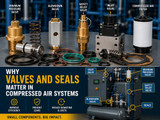
Why Valves and Seals Matter in Compressed Air Systems
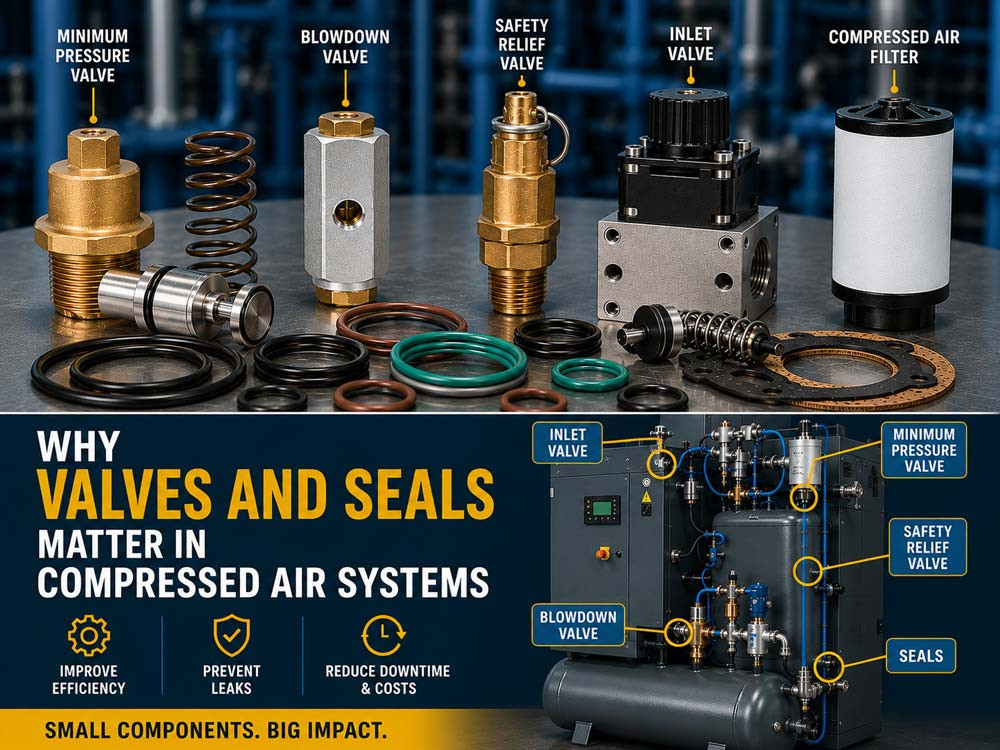
Valves and seals are some of the most overlooked components in a compressed air system, yet they directly affect pressure control, efficiency, reliability, and equipment life.
Most facilities focus on compressors, dryers, and filters. Those components are important, but even the best equipment can develop problems when valves stick, seals wear out, or air leaks begin to develop throughout the system.
A worn O-ring or malfunctioning valve may seem minor, but it can lead to increased energy consumption, unstable system pressure, oil carryover, excessive compressor cycling, and costly downtime.
Common Valves Found in Compressed Air Systems
Different valve types perform different jobs throughout the compressor package and air distribution system.
| Valve Type | Primary Function |
|---|---|
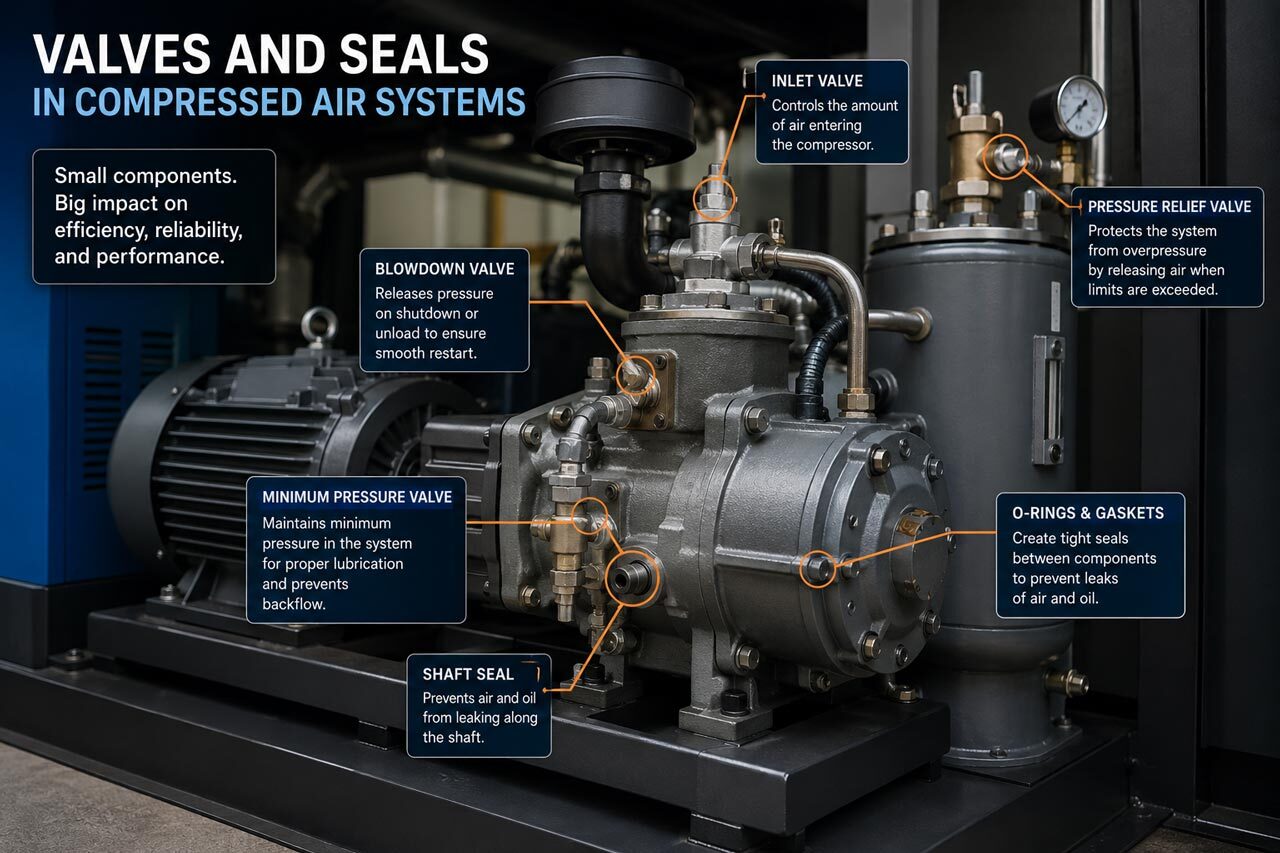
| Inlet Valve | Controls airflow entering the compressor. |
| Minimum Pressure Valve | Maintains internal vessel pressure for lubrication and oil separation. |
| Blowdown Valve | Releases pressure during unloading and shutdown. |
| Safety Relief Valve | Protects equipment from excessive pressure. |
| Check Valve | Prevents reverse airflow. |
What Do Seals Actually Do?
Seals are responsible for keeping compressed air, lubricant, and moisture contained where they belong. They are found throughout compressors, filters, dryers, piping systems, drains, and pneumatic equipment.
Common sealing components include:
- O-rings
- Gaskets
- Shaft seals
- Valve seats
- Mechanical seals
- Diaphragms
- Piston seals
These components gradually wear due to heat, pressure cycling, contamination, vibration, and lubricant exposure.
Signs of Valve or Seal Problems
Many compressed air problems can be traced back to worn valves or damaged seals.
- Difficulty maintaining pressure
- Higher compressor run time
- Frequent load/unload cycling
- Oil leaks around compressor components
- Audible air leaks
- Reduced air quality
- Unexpected pressure fluctuations
- Increased energy consumption
 Why Air Leaks Cost More Than You Think
Compressed air is one of the most expensive utilities in most manufacturing facilities. Every leak forces the compressor to run longer to maintain system pressure.
When valves fail to close properly or seals begin leaking, the compressor may compensate by increasing run time, creating unnecessary electrical costs and additional wear on major components.
Maintenance Best Practices
Routine inspection and replacement of valves and seals can help prevent expensive failures.
- Inspect valves during scheduled compressor maintenance
- Replace O-rings and gaskets when servicing components
- Check for air and oil leaks regularly
- Monitor pressure stability and compressor cycling
- Verify safety valve operation
- Follow manufacturer service recommendations
Small Components, Big Impact
Valves and seals may not receive as much attention as compressors, dryers, or filters, but they play a major role in system performance. Properly functioning valves help control airflow and pressure, while healthy seals prevent leaks and contamination.
Keeping these components in good condition can improve reliability, reduce energy costs, and extend the life of your compressed air equipment.
Recent Posts
-
Walker Filtration Compressed Air Filter Housings Guide
Walker Filtration offers compressed air filter housings for everything from a small point-of-use air …Aug 25, 2026 -
nano R4 DXR Refrigerated Air Dryers: Reliable Moisture Removal for Compressed Air
nano R4 Direct Expansion Refrigerated Air Dryers: Reliable Moisture Removal for Industrial Compresse …Aug 07, 2026 -
Why Valves and Seals Matter in Compressed Air Systems
Valves and seals are some of the most overlooked components in a compressed air system, yet they di …May 30, 2026